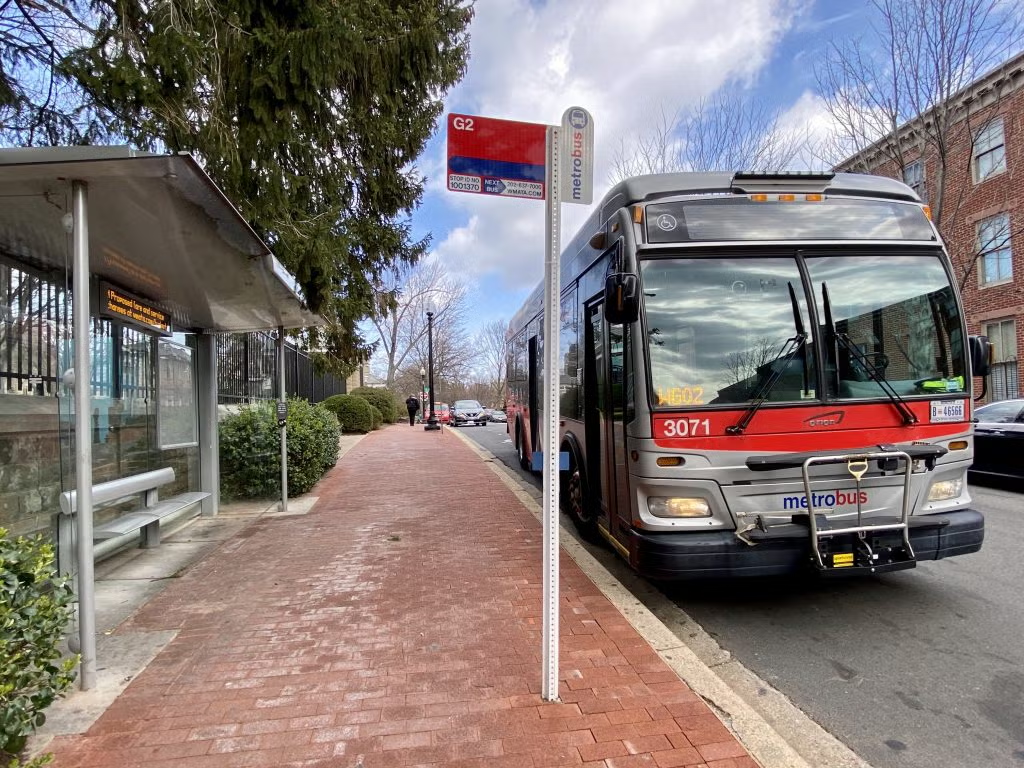
I was furloughed today. I walked from the Department of Labor to the White House. Constitution Avenue was eerily quiet—no traffic, just a few tourists and the occasional federal worker on a gorgeous D.C. day. I sat at a random bus stop, trying to sort out my emotions. The beauty of the day was at odds with the heaviness I felt. To pass the time, I started scrutinizing the bus stop.
Since I’m a fan of the Code of Federal Regulations, I knew there is almost not a single object on my person or structure around me—as far as I could see, hear, smell, or breathe—that doesn’t have regulation behind it. The shelter was built from materials tested for safety and strength. Even the nails and weight capacities were regulated. The bench left room for a wheelchair. The signage followed national standards so riders everywhere could recognize it. Crosswalks, curb ramps, and traffic signals existed because engineers, construction crews, law enforcement set rules and emulate them.
And sitting there, the bus stop became something larger—a magnifying glass for society itself. If every bolt, bench, and crosswalk reflected regulation, then so did the rest of our lives: safe water when you turn the tap; food inspected and labeled on the shelf; buildings that don’t collapse; bridges that don’t fail; planes that land safely; power grids that stay on; medications that heal, not harm; storms tracked before they strike; the internet protected from attack. The bus stop wasn’t the exception—it was the rule. Life itself is scaffolded by standards, upheld by individuals most people never see
That’s why government shutdowns are so damaging. When agencies close, it isn’t only “Washington politics” that stop—it’s daily life everywhere: scientists stop monitoring food and medicine; analysts and program specialists can’t deliver payments to veterans and families; safety inspectors step back from factories and workplaces; judges slow their caseloads; firefighters lose federal backup for wildfires; the National Park Service can’t maintain trails, wildlife, or visitor safety; air traffic controllers stretch thin; energy regulators step aside; storms go untracked; networks undefended; history unpreserved. The ripple effects touch every household and every business.
The federal workforce is not a faceless bureaucracy. It is approximately 2.95 million patriots – scientists, soldiers, analysts, health workers, inspectors, investigators, judges, park rangers, firefighters, engineers, etc. —who make life safer and more reliable for 340 million Americans. The next time you wait at a bus stop or cross a regulated street, remember: without public servants, order collapses into chaos. With them, we enjoy clean water, safe roads, sturdy buildings, reliable power, protected lands, and the freedom to live our lives with confidence.
Government workers are not the problem. They are the protectors of the American people. A shutdown doesn’t silence bureaucracy—it silences the people who hold our nation together.