Stand on the shore at dawn and watch the horizon blur between sea and sky. Waves crash rhythmically, seagulls wheel overhead, salt air fills your lungs. It feels timeless—wild, eternal, untouched by human hands. But the stability and safety of our oceans, and of our ability to live, work, and play along their edges, depend profoundly on structures of public stewardship that most of us never see or come to appreciate.
Every body of water is mapped, monitored, and protected through intricate federal and international frameworks. Shipping lanes are charted and regulated to prevent collisions. Navigation buoys and lighthouses are placed and maintained by federal agencies to keep mariners safe. Coastlines are surveyed and updated constantly to reflect shifting tides and sediment patterns.
Beneath the surface, fisheries are managed through quotas, seasons, and catch methods set by science-based policy to prevent collapse. Marine sanctuaries protect biodiversity. Pollution controls safeguard against oil spills, chemical runoff, and plastics. Weather buoys and satellite systems feed meteorological models that warn communities of hurricanes and tsunamis.
The main federal agencies that manage fish and wildlife are the U.S. Fish and Wildlife Service (USFWS), part of the Department of the Interior, and National Oceanic and Atmospheric Administration (NOAA) Fisheries, also known as the National Marine Fisheries Service. The USFWS manages terrestrial, freshwater, and migratory resources, while NOAA Fisheries specifically manages living marine resources within approximately 200 miles of the U.S. coast.
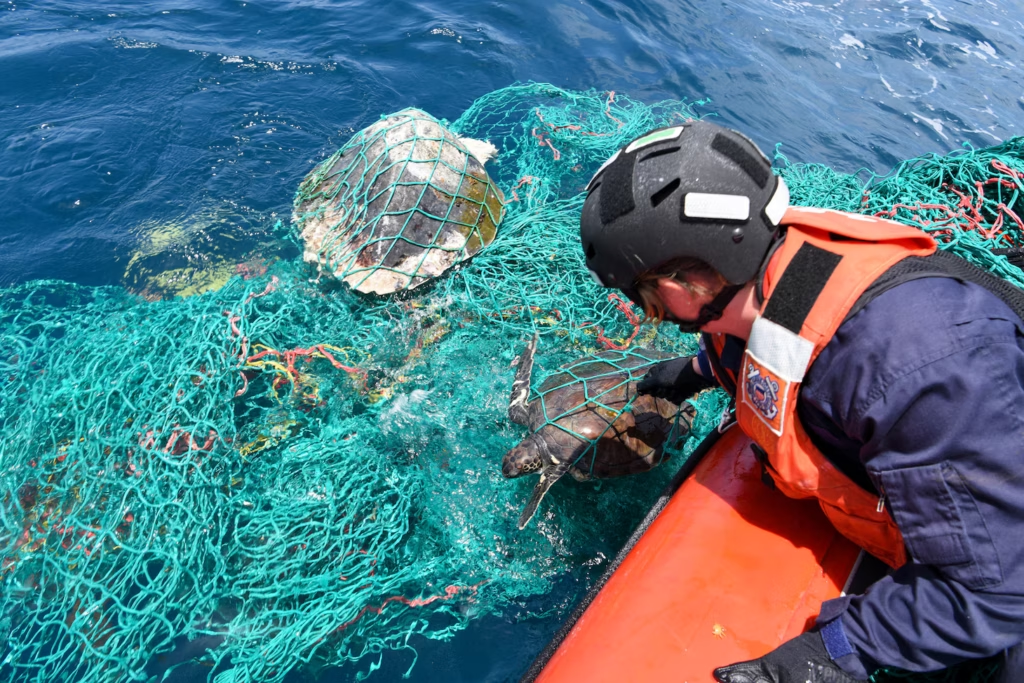
Agencies like NOAA, the U.S. Coast Guard, the Environmental Protection Agency (EPA), and the U.S. Navy work in concert with scientists, international partners, and local communities. Their daily labor is largely invisible to the beachgoer collecting shells—but it is their vigilance that allows ships to move safely, seafood to be sustainable, storms to be tracked, and coastlines to endure.
When government pauses, so do the protections that quietly hold the nation together. Navigation channels silt over, weather satellites go unmonitored, fisheries oversight falters, and pollution response teams stretch beyond capacity. The ocean doesn’t stop moving—but the systems that safeguard lives, economies, and ecosystems grow perilously fragile. When experts are sidelined or resources cut, preventable tragedies follow: lives and property lost in Alaska’s storms, homes swept away in Texas floods, communities left unprepared for disasters that could have been foreseen. What feels eternal — safety, order, balance — is not self-sustaining. It endures only because skilled public servants labor each day to foresee danger before it strikes, and to protect what cannot protect itself.